Reaching New Heights in Conservation Efforts
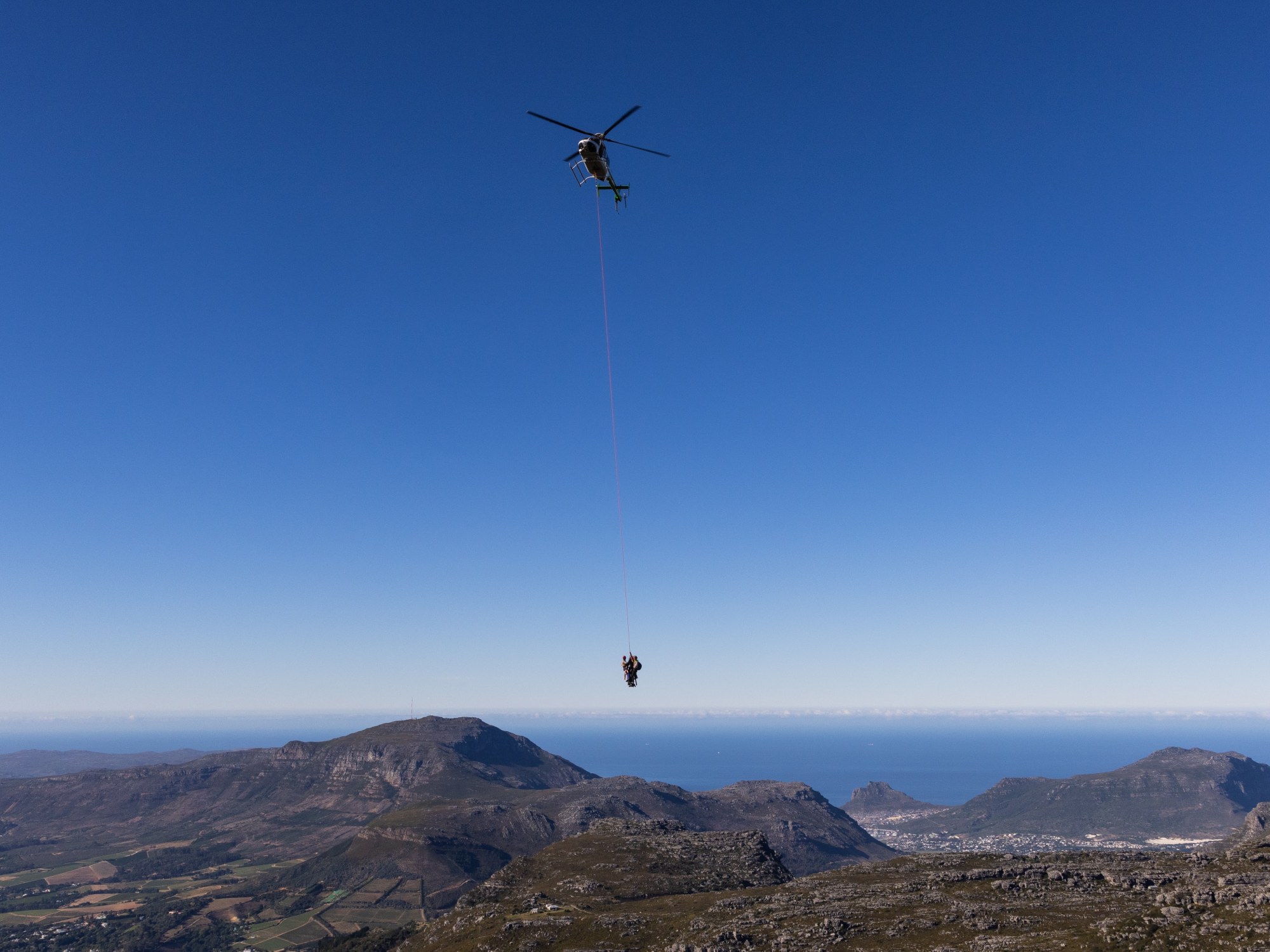
Photo: John Gale, Table Mountain, 2023
A loud noise cuts through the early morning calm, drowning out the chirping of the birds as the first sunlight illuminates the rugged outcrops of the eastern slopes of Table Mountain National Park (TMNP).
Read more: Jack Journal: HelihackingTWOCK- TWOCK- TWOCK- TWOCK, the rotator blades of the helicopter sound, their dark silhouettes blurred against the bright blue sky that is permeated by small puffs of cloud. Three people are suspended from the helicopter with only a rope attached to their harnesses. Colourful climbing helmets crown their heads, their eyes disappearing behind lightweight protective eyewear. The three pairs of dangling legs are flanked by chainsaws that are clipped to carabiners on their hip belts. What residents of Newlands Forest might mistake for some elaborate mountain rescue is actually a planned helicopter hack of alien invasive trees such as pines, wattle, and gums that have infested the higher slopes of Table Mountain. Aleck McKirdy, who started hacking invasive alien trees with his father, explains: “That is where we prefer a helicopter. You usually run out of places where it can land… That’s why we use the short hauling system. Normally, it is a 30-meter sling under the chopper and the operators are clipped into that in groups of three.” His work in forestry and the mountains soon made it obvious that the higher-up trees – those that could not be reached on foot – were the ones that continually re-infested the lower slopes. To get ahead of the invasives meant finding new ways to reach trees on top of those higher cliffs.
The article was published in Jack Journal Vol. 8 in 2025. Special thanks to Su Birch (editor).
Read the full article here:
 Julia Kausch